Tackling one of the biggest challenges of our century: resource-hungry AI and its impact on the world around us
An interview with Mario Fernandez, Young AI Geneva Leaders
AI brings advances in areas such as healthcare with astonishing speed. But how do we keep up with the resources AI needs to operate, and how do we ensure we do this with environmental stewardship in mind?
Meet Mario Fernandez, organiser of the Geneva-based ‘AI and the Planet’ conference and member of Young AI Geneva Leaders. He’s focused on exactly these key questions.
In this article, we hear more about his work, supported by the Geneva Network of Innovators (ge-ni), whilst exploring themes on digital transformation and environmental sustainability. We finish by hearing about what has inspired his professional journey.
Make sure you read to the end to learn about how one of his favourite hobbies has given him a keen awareness of man’s impact on our planet.
"environmental sustainability and digital transformation are two of the defining challenges of our century"
Mario Fernandez
Mario, you help young professional talent in International Geneva connect over themes such as Artificial Intelligence. How did this work come about?
Before coming to Geneva, I spent several years researching the environmental, social, and economic performance of office buildings. It was while working on smart buildings that I noticed an important tension.
On the one hand, smart buildings are often presented as a solution for making buildings more environmentally friendly. Digital technologies and data help optimise how resources, such as energy and water, are used. However, this digital infrastructure has a significant environmental footprint. Sensors, servers, and data centres all consume large amounts of energy, water, and raw materials, such as metals. And when this equipment is replaced, it also creates electronic waste.
With the use of AI booming, I started thinking about the impact of AI on the environment. Very few people were talking about this. To me, that was surprising, because environmental sustainability and digital transformation are two of the defining challenges of our century.
This realisation made me want to engage more actively with these questions, whilst bringing the voice of younger generations into the conversation.
And why does the world need this type of initiative?
Before the AI boom, the world was already facing what many call the triple environmental crisis: climate change, biodiversity loss, and pollution. These challenges are deeply linked to the way our global economies and societies are structured, which, despite progress in some areas, remain largely unsustainable.
Now, with the rapid expansion of AI, we are adding another layer to this situation. The development and deployment of AI relies on a vast value chain that includes data centres, computing infrastructure, and large amounts of raw materials and energy. If this continues without careful consideration, it could become a significant driver of the environmental pressures we are already struggling with.
This is why initiatives like our ‘AI and the Planet’ conference are important. They create a space to openly discuss these challenges and bring together different actors to think about solutions. AI does not have to be a threat to the environment, but if we want it to contribute positively to society, we need to acknowledge the risks and work collectively to address them.
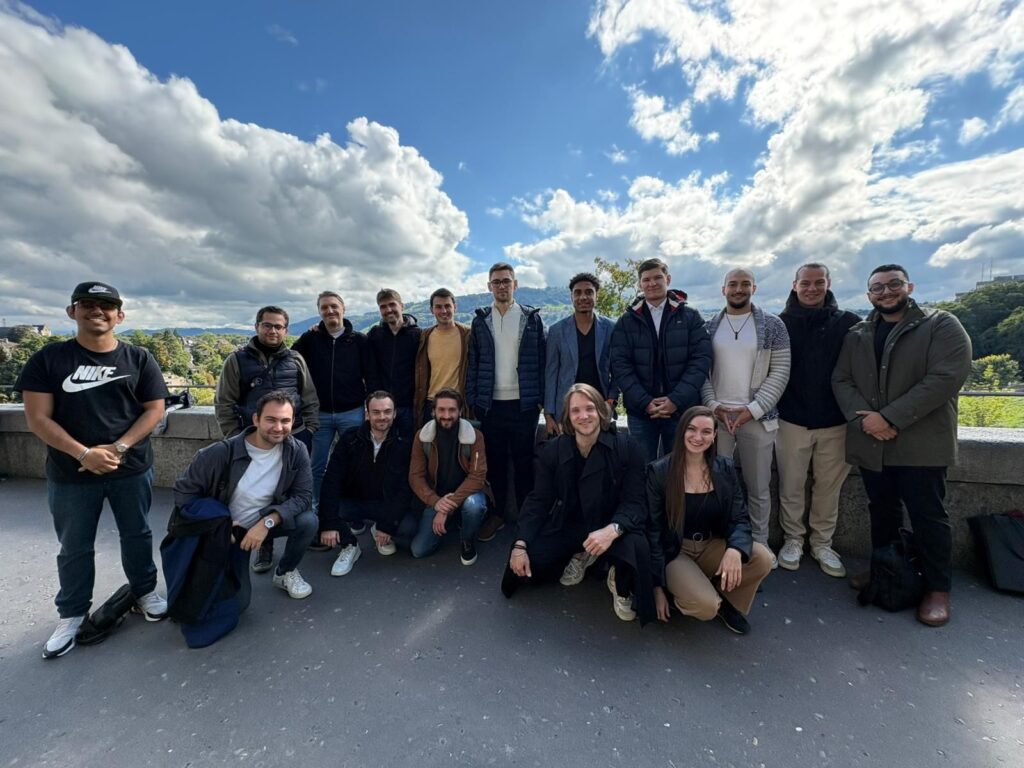
Interest in AI and sustainability is high in Swiss university, public sector and private sector communities
"The development and deployment of AI relies on a vast value chain that includes data centres, computing infrastructure, and large amounts of raw materials and energy. If this continues without careful consideration, it could become a significant driver of the environmental pressures we are already struggling with"
Mario Fernandez
What excites you about the AI and the Planet conference you are organising?
Beyond the fact that it’s our first conference, which is exciting enough, I’m really looking forward to working with our panelists and seeing what results from the networking. We have the privilege of hosting high-level speakers from International Geneva, the University of Geneva, and potentially from Geneva’s thriving AI private sector. Everyone I’ve spoken to has been very enthusiastic about the event, and that is very encouraging.
How can ge-ni, the Geneva Network of Innovators, benefit from this idea?
At a time when the role of International Geneva is being put under strain, ge-ni sits at the heart of a network whose mission is to break down silos and drive innovation in response to a changing world. In that sense, there is nothing more timely, more innovative, or more concrete than addressing the challenges of AI. It is transforming all of our lives, whilst impacting the environment, which sustains all of our lives. It’s not so much that ge-ni will benefit from this initiative, but that our partnership with ge-ni can contribute to tackling the critical issues arising from the rise of AI and its impact on the environment.
How did you hear about the ge-ni project and first get involved?
I heard about it through Murillo Salvador, who is our Hub leader. The conference we are organising is my first involvement with ge-ni.
"ge-ni sits at the heart of a network whose mission is to break down silos and drive innovation in response to a changing world"
Mario Fernandez
What advice would you give to someone in the international Geneva community, who is thinking of developing a project?
Take the time to think carefully about the concrete needs our world is facing and consider both the urgency and scale of these challenges. The most effective projects are those that address specific, pressing problems, because focusing on these allows you to maximise your impact without requiring more effort.
Do you have any thoughts on who could be potential partners to scale shared innovation in Geneva?
It really depends on the kind of change we want to make. From the environmental side, universities are a great starting point, followed by actors from the private sector.
Do you have any requests or ask to our audience? Is there a skillset or advice you are looking for?
Whilst we are collaborating with ge-ni on communication, we would love to engage with those with experience in communication strategies and outreach specifically for events, as well as anyone with experience in event organisation.
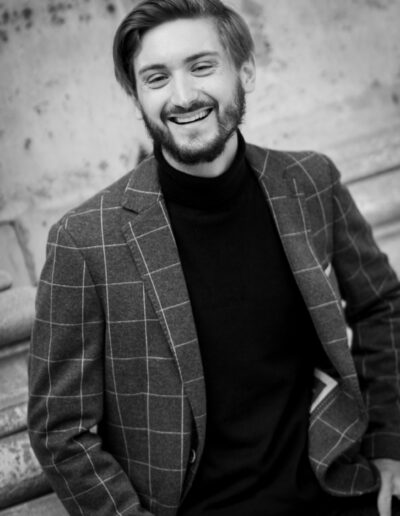
"The most effective projects are those that address specific, pressing problems, because focusing on these allows you to maximize your impact without requiring more effort"
Mario Fernandez
Thank you for talking us through what’s currently keeping you busy. It would be nice to know a bit more about you. So, who is Mario Fernandez? How did you end up in Switzerland?
I am a Spanish and French national who has lived in many countries before making Switzerland my home. I grew up in the United States, spent most of my adult life in France, and have also lived in Brazil and Belgium.
How I ended up in Switzerland ties back to my earlier story. As I mentioned, I discovered the environmental issues linked to digitalisation and the AI boom. Once I saw them, I could never “unsee” them, and they stayed with me.
Eventually, I realised it was time for a career change, so I began my second Master’s in Sustainable Societies and Social Change at the University of Geneva, focusing on the sustainability of new and emerging technologies.
Do you have any career highlights you would like to share?
A few years ago, I completed a bachelor’s and a master’s in political science at Sciences Po in Paris. My bachelor’s focused on Latin America, and my master’s on the European Union.
Environmental issues have long been central to my interests, but their connection to AI and digitalisation became clear gradually as my academic and professional path evolved. From early on, I knew that environmental governance would be at the core of my career, but I also felt it was important to gain experience across different sectors to understand where I could have the greatest impact.
This led me to my first post-Master’s role conducting CSR market research in the fashion, design, and retail industries, followed by a position as Research and Foresight Manager focusing on the economic, social, and environmental performance of office buildings. It was in this latter role that I really noticed the tension between digitalisation, the AI boom, and sustainability, leading to my career change.
"Scuba diving has made me very sensitive to our impact on nature and constantly makes me think about what we can do to improve our relationship with the environment"
Mario Fernandez
Are there any lessons or experiences you’ve had outside of work, which have shaped your professional choices or professional vision? For example, hobbies or voluntary work?
I’ve been an avid scuba diver for many years, and every time I dive, I become more aware of the extent of the environmental damage we are causing. I’ve even found plastic bags and straws almost 30 meters underwater, and it’s striking to see how this affects marine life and wildlife. Scuba diving has made me very sensitive to our impact on nature and constantly makes me think about what we can do to improve our relationship with the environment.
On top of that, I’ve been meditating every day for several years. This practice has been key in changing how I see my place in the world. As humans, we often put ourselves at the centre, but we aren’t the centre, and recognising this is essential when we think about how we interact with the environment.
This interview is part of a series exploring themes of innovation within the international community in Geneva, hosted by the Geneva Network of Innovators. The interview was conducted on 9th March 2026 and is correct at the date and time of publication.